My feet sho do hurt an my back be sore too. I be marchin’ damn near every day fo a month. We drag our tired butts in da Fort Cummings after a whole month on da trail fum Fort Union, 400 miles ter da north. W’at a God-awful place dis Fort Cummings be, it be da loneliest most desolate place I ever be in in my year in dis damn army. Maybe dis be da end of da line atter forts Riley an Harker in Kansas an dat long-ass march ter Fort Union. I bet we walks da whole damn Santa Fe Trail.
I be William Cathay, a private in A Company, 38th U.S. Infantry Regiment, one of da colored units formed durin’ da war tween da states. I signs up in November, 1866 in St. Louis wid a big secret because I wants ter make my own livin’ an not be dependent on my relations or friends fo a livin’. A Company be 76 Negro privates, mostly fum Georgia, an a handful of white NCOs an officers. We be out of Fort Harker, Kansas just in time; da whole damn army be comin’ down wid cholera by da time we hit da trail fo Fort Union. Fort Union be easy duty; it be da supply center an da major fort in da whole damn territory.
Dis fort ain’t much; it got high doby walls an good water. Dat be bout it. We got big mean red ants, scorpions, rattlesnakes an lots of Apaches. All of dem things will kill you an dey be everywhar. I put da legs of my bunk in buckets of water ter keep dem damn ants off me at night an cover da ceilin’ wid a tarp ter keep da scorpions fum sleepin’ wid me. We be on da lookout fo rattlers all da time an we post guards ter scare off da Apaches. I can’t wait ter go on patrol an shoot me some Apaches.
Duty at dis fort sho beats marchin’. We drill fo a couple hours, clean up da barracks an da grounds, spend a lotta time lookin’ fo, cuttin’ an stackin’ firewood an be on guard duty all da damn time. Every now an den we go on a patrol lookin’ fo Apaches. I ain’t seen no Apaches but I heared da sentries yell at dem da udder night. Dey be all around da fort but dey be really sneaky. Dem Apaches de hangs out at da springs at night just waitnin’ fo someone ter git some water. You kin hear dem wid dar coyote calls as dey sneak ‘round in da dark. I ain’t gittin’ no water at night.
Soon as we be settled some of dem farm boys fum Georgia be talkin’ bout mutiny. Dey goanna kill all of da white officers, take all da horses an supplies, make all of da officer’s wives slaves an den w’at? Nobody ever splained ter me w’at we gonna do next. Whar we gonna go? Ef we stays at da fort we be run out of supplies an den w’at? I thought dis be a dumb plan an I told those farm boys w’at I thinks of dar “kill da whitey” plan.
Da next mornin’ we be told ter fall out wid no rifles fo da pay master. As soon as we open da doors ter our barracks we seed dem two big cannons aimed right at us. All da white officers an NCOs be lined up wid dar side arms. Da commanding officer give us a little speech bout da penalties fo mutinous conduct, an den announces ter us dat our plot be discovered. He demand da immediate surrender of da ringleaders.
We runs fo our quarters expectin’ ter git our rifles. Da doors ter our barracks be locked an white 3rd Cavalry men be in da windows wid dar carbines lookin’ at us as ef dey be ready ter shoot. W’en we turn we see dat our officers did draw dar guns an be pointin’ dem at us.
I fall ter my knees as do da udder privates. Everybody be beggin’ fo mercy an cryin’ dey be innocent. We be so scared dat everybody blowed on da ringleaders. Da officers an da guards jump on da mutineers an drag dem ter da guardhouse. We later heared dat da colored maid had blowed us ter da officers.
Everythin’ be normal again except we hear dem mutineers scream an beg as dey be bucked an gagged in da guardhouse. Bucked an gagged be da punishment most used in da army on da Negro private. A piece of wood be tied in da prisoner’s mouth an his knees be pulled up ter his body wid nother piece of wood run through his legs. He be tied up like a trapped rat be. I sho be glad I not git blowed on.
We just be at Ft. Cummings a few weeks w’en I be assigned ter a firewood party. We done loads a wagon full of wood an be headin’ back ter da fort w’en we comes around a bend on da ole Butterfield trail an we did run face-ter-face wid a whole mess of dem Apaches. We races down da trail towards da fort while da Apache runs in da udder direction. We just be scared of each udder an runs away. My first meetin’ wid da Apaches an we just runs away.
One day da sentry in da tower done see dis wagon train off ter da east be attacked by Apaches. He shout ter da fort, “Apaches, Apaches.” Da cavalry race ter da wagons an scares off da Apache. We done save dar asses. Dis be da best we kin do fo des poor folks.
Bout da worst duty here be guard duty on da midnight ter four watch. You be freezin’ yo’ ass in da wind an dem damned Apaches be sneaked right up on you. I be in da watch-tower lookin’ out in da moonlight w’en da udder sentry pokes me en points ter some shadows down da wall ter da right. We looks an sees two Apache stringin’ lines over da wall. I aim my carbine an fire. I see da sand fly near one of da Apaches an dey run off in da night. My shot wake da whole damn fort an soon dat mean Sergeant Rockwell be yellin’ in my face.
“What the hell are you shooting at, Cathay, ghosts?”
We opens da gate an walk down ter da place I seed da Apaches. Sgt. Rockwell has a lantern an we see da footprints in da sand an a rope throwed up over da wall. Rockwell pulls down da rope wid a big stone at da end an pats me on da back an sez, “Nice work, Cathay. You saved some stores and maybe even someone’s life. Now get back to your post.”
I feel real proud. Dis be da first pat-on-da-back dat mean ole Sgt. Rockwell ever give me.
Dar be nothin’ ter do w’en you ain’t got no duty. We sit in da barracks, play cards, sing sad ole slave songs an git in da fights over da dumbest things. I be afraid ter git in da fight. I got a secret nobody knows nothin’ bout but me. Fightin’ might blowed my secret. W’en whitey git mad at us fo gamblin’ dey git some poor private an march his ass about da garrison wid heavy planks tied ter his back wid da word “gambler” marked on it in chalk.
One mornin’ Sgt. Rockwell picks me an 5 udder privates ter go on a grave detail. We take da wagon west on da trail fo bout 2 miles an find a burned wagon, two dead horses an five bodies. Da bodies be two white men, one white woman an two little boys. It be easy ter tell w’at dey be ‘cause da Apache done stripped every stitch of clothes off da bodies. Da soldiers just stare at da naked white woman. She be pretty ef she be alive. We roll da bodies in blankets an stacks dem in da wagon an head back ter da fort. Diggin’ five graves be more wuk than any of us want ter do. Maybe Sgt. Rockwell give us some more help ter dig dem graves. Nobody talks on da ride back ter da fort. Da killin’ of dem white folks by dem damn Apaches make us sad an ef we be honest, scared too.
One cold, cold mornin’ in January I go ter da hospital wid a bad case of rheumatism. Da doc he done put me in da hospital but after three days he send me back ter duty. Two months later my rheumatism be actin’ up again an I kin hardly stand straight or walk right. Da doc puts me in da hospital fo three more days. Dis doc can’t fix no rheumatism.
Early in June we march 47 miles ter Fort Bayard in two days. Fort Bayard be a pretty place wid trees, grass an no ugly-ass wall. I wonder how dey keeps da Apaches out of da fort wid no wall. One week later I be back in da hospital wid dis pain all over my body. Da doc calls it neuralgia.
I be in dis hospital fo one month w’en dis doctor he done pull down my drawers ter feel my belly. He jumped like a scared toad w’en he discover da secret I keep fo goin’ on two years now. I be a woman called Cathay Williams.
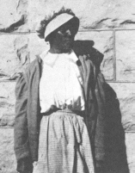
Author’s note: This story is based upon the real life of Cathay Williams. She was the first African American female to enlist, and the only woman documented to serve in the United States Army posing as a man under the pseudonym, William Cathay. She was born a slave near Independence, Missouri around 1844 and enlisted in the United States Regular Army on 15 November 1866 at St. Louis for a three year engagement, passing herself off as a man. She was stationed at Fort Cummings from October 1, 1867 as a member of A Company, 38th U.S. Infantry Regiment until their march to Fort Bayard on June 6, 1868. All of the events in this story are taken from the pages of Annals of Old Fort Cummings, New Mexico, 1867-8 by William Thornton Parker M.D. published in 1916. It was only after she had grown weary of military service that she feigned illness and her gender was revealed to the post surgeon. She was discharged from the Army on a surgeon’s certificate of disability on October 14, 1868. She died in Trinidad, Colorado in 1892.
 Too Much Tequila, Too Little Sunscreen