• My MD sent me to the ICU for an MRI after he read my EEG. Is this any way to talk? I refuse to use initials for things that I don’t really understand. Just so you might avoid giving CPR to a DOA, I put together this little quiz. Now let’s see if you really know what you’re talking about.

    MRI
    A. Martha Rants Incessantly
    B. Mary’s Really Interesting
    C. Magnetic Resonance Imaging
    D. My Romeo’s Impotent

    TGIF
    A. The Glacier Is Floating
    B. Thank God It’s Friday
    C. That Gross Indian Farted
    D. Talk Gilda Into Flossing

    CPR
    A. Clyde Pees Regularly
    B. Child Pornography Reeks
    C. Classic Poems Rhyme
    D. CardioPulmonary Resuscitation

    DNC
    A. Dilation aNd Curettage
    B. Dogs Need Combing
    C. Dissecting Nude Cadavers
    D. Date Nasty Chicks

    GPA
    A. Grace Plays Around
    B. George Pukes After
    C. Grade Point Average
    D. Gladys Pickles Artichokes

    DOA
    A. Don’t Overdose Again
    B. Deer Outrun Antelope
    C. Dead On Arrival
    D. Drink Only Anisette

    DDS
    A. Dip-shits Drink Soda
    B. Delores Digs Sodomy
    C. Doctor of Dental Science
    D. Don’t Drink Schlitz

    EKG
    A. Evelyn’s Kinda Gross
    B. ElectroCardioGram
    C. Ericka Knits Garters
    D. Enjoy Kinky Girls

    FACP
    A. Fellow of the American College of Physicians
    B. Fat And Chubby Polynesians
    C. Frustrated Alice Cried Pathetically
    D. False Advertising Cheats Patrons

    ASAP
    A. Always Sleep After Partying
    B. Alice Screwed A Peruvian
    C. Avoid Skunks And Porcupines
    D. As Soon As Possible

    PDQ
    A. Platypuses Don’t Quack
    B. Pantyhose Dry Quickly
    C. Pretty Damn Quick
    D. Paula Does Quaaludes

    DEA
    A. Dilbert Earned Accolades
    B. Drug Enforcement Administration
    C. Daniel Enjoys Affixation
    D. Dorthy Eats Anchovies

    FAA
    A. Forget Angry Assholes
    B. Flinch After Acupuncture
    C. Federal Aviation Administration
    D. Farting Angers Annie

    USN
    A. Use Sanitary Napkins
    B. Uma Sucks Noodles
    C. United States Navy
    D. Under Sheila’s Nose

  • When you’ve got something new to announce in the business world, you hold a press release event, invite all of the journalists important to your industry, and hope for front page coverage, above the fold, in the Wall Street Journal. I’ve done many of these, but it’s the memory of four such events that still rumbles around in my tequila soaked brain.

    Back in the nineties, I held a press conference at the Windows on the World restaurant on the top floors of the north tower of the World Trade Center in New York. I’ve long since forgotten whatever it was I announced that day, but the images of the restaurant still haunt me. It is not the memories of the spectacular views or the enthusiastic audience or my moving speech, but it’s the images of the wait staff, the bus people, and the dishwashers and cooks that I never actually saw, that I see in my dreams. I’m destined to see the burning remains of these poor people fall from the 106th and 107th floors over and over and over.

    I hosted another big press event in Manhattan at the Copacabana. I actually stood on same stage and spit into the same mike that Sammy Davis Jr, Rodney Dangerfield, Phyllis Diller, Jimmy Durante, Jackie Gleason, Buddy Hackett, Groucho Marx, Don Rickles, Joan Rivers, Phil Silvers, Danny Thomas, Robin Williams, and a host of others had done before me. But it’s Ray Liotta and that scene from the movie Goodfellas that still bounces from one rapidly-dieing brain cell to another. If you squint your eyes, and the light is just right, you can see the wiseguys and their molls sitting at their table right down front.

    Popular ScienceI hosted another of memorable press event, with lots of pomp and fuss, on the lawn of the California Institute of Technology to announce the installation of the world’s fastest supercomputer. The jacaranda trees were in full bloom, the weather was perfect, and the champagne was on ice. A US Congressman opened things up followed by a senior scientist from DARPA (Defense Advanced Research Projects Agency). The president of Caltech spoke as did Gordon Moore, the chairman of Intel and a Caltech grad. This press event earned us the cover of Popular Science along with a host of other coverage.

    And would you believe it, I actually held a press conference at Carlton House Terrace, the home of the Royal Society in London, and in the Michael Faraday room, of all places. This learned society was founded in 1660, and functions today as the UK’s Academy of Sciences. A plaque must hang somewhere in this historic place that reads: Sir Isaac Newton, Charles Babbage, Michael Faraday, Bob Rockwell…

    A press conference almost always consists of a presentation, a handout which includes a press release, appropriate photos, and other promotion material, and a question and answer session often followed by cocktails or a reception. The idea is that you give everyone all of the information they need to write their stories, and then you give them some one-on-one time over cocktails, so they can put their own slant on things. I was always amazed at how the simple message I tried to tell could get twisted around and told in so many different ways. The Wall Street Journal would say one thing and the major dailies would say something else. The New York Times, the San Jose Mercury News and The Boston Globe had technology reporters that generally got things right, but I once spent an entire lunch trying to explain whatever it was I was pitching to a reporter from Women’s Wear Daily. I kept reminding myself—there is no such thing a bad publicity.

  • Deming Writing Group Assignment
    Write about something that has disappeared in your life that you miss

    October 17, 1963
    Another spectacular sunset paints the sky in warm pastels as the sun plays peek-a-boo through a stately row of quaking eucalyptus trees. These haunting giants dwarf the groves of orange trees they protect from the winter winds. The perfectly shaped and neatly arranged orange trees seem to display their overly laden branches with almost human-like traits of vanity and pride. As I pass through mile after mile of these beautifully groomed and so valiantly sheltered groves I wonder why all of this repetition doesn’t seem monotonous. Maybe we can appreciate and actually love sameness when it’s presented this beautifully.

    July 12, 2010
    I remember this road from an old map I’ve kept over the years. I can’t wait to travel this leaf strewn country lane once more and see how time has treated the many orange groves that gave Orange County its name. Today the road of my memories resembles any of the thousands of other busy suburban streets that pass though endless arrays of housing developments, strip malls and shopping centers. I frantically search for any signs of the past, the groves, the eucalyptus windbreaks, the beauty but it is all gone, everything is gone. “Wait I see something, look over there—there’s one old eucalyptus tree that actually survived.” I look again. “Look,” I yell. “Look that tattered old tree is weeping.”

  • I was fumbling through something or other, and read that The World Values Survey rates Japan as the highest in the world in “Rational-Secular Values”, whatever they are. I really like Japan and have the greatest respect for all things Japanese. Who or what the hell is the World Values Survey, and is it good or bad being numero uno in “Rational-Secular Values”, whatever they are?

    I just learned that The World Values Survey is a bunch of social scientists in Sweden who have been looking into people’s values and beliefs since 1981. They are especially interested in how people’s values and beliefs change over time and the social and political effects of all of that.

    So what’s up with this “Rational-Secular Values” thing? Here’s what I learned, verbatim:

    Secular-rational values have the opposite preferences to the traditional values. These societies place less emphasis on religion, traditional family values and authority. Divorce, abortion, euthanasia and suicide are seen as relatively acceptable.

    It seems that to understand secular-rational values you must first understand what they mean by “Traditional Values”.

    Traditional values emphasize the importance of religion, parent-child ties, deference to authority and traditional family values. People who embrace these values also reject divorce, abortion, euthanasia and suicide. These societies have high levels of national pride and a nationalistic outlook.

    So I looked up the definition of “traditional” just to double-check. A tradition is a ritual, belief or object passed down within a society, still maintained in the present, with origins in the past. What does that tell you? These social scientists in Sweden are comparing Japan’s passed down “traditional” values to their own Western, no doubt, “traditional” values. Theirs are good, anything different is bad.

    Who am I to argue with world-class social scientists but they’ve got this all wrong. Spend any amount of time in Japan and you’ll take exception to this broad and unearned generalization.

    It is true that the Japanese put less emphasis on religion that Western societies, and I find that to be a good thing. Most (83%) Japanese practice Shinto, their indigenous religion, which means “the way of the gods”. And, unlike Judeo-Christian religions, Shinto does not require an admission of faith, instead merely participating in certain aspects of Shinto is generally considered enough. Any religion passed down from prehistoric times that demands a respect for nature and for particular sacred sites can’t be all bad.

    Our so-called “family values” is the cry from the social conservatives and the religious right of Republican Party in the US. When they preach family values they are preaching their take on what they call their Christian values. These groups viciously oppose abortion, pornography, pre-marital sex, homosexuality, certain aspects of feminism, cohabitation, separation of church and state, and depictions of sexuality in the media. They like, however, abstinence education, displaying the Ten Commandments, and allowing teachers to conduct prayers in public schools. Now if this is what we’re calling “family values” I’m glad Japan didn’t score well.

    You only have to spend a few minutes dealing with a Japanese corporation or sitting in a classroom in Tokyo or, I’m guessing, training with the Japanese military to realize that that crack about “authority” is way off the mark. If the Japanese people are anything, they may be too subservient to authority. We were taught unquestioning obedience in the US Marine Corps, and if ever a society modeled this principle, it’s Japan. What were these yoyos thinking when they claimed the Japanese put less emphasis on authority? Less than whom?

    Okay, I just looked up the divorce rates in Japan, and found that it has doubled in the last 20 years, but it now is about half of that of the US and roughly equal to that of Germany and Sweden.

    It is true that abortion is de facto legal in Japan. Approved doctors can perform an abortion on anyone who requests it. So the Japanese have legalized abortion, and done it right, as best as I can tell. What do you think their abortion rates are compared to countries with more “Traditional Values”? Here’s how many abortions were performed per 1,000 women by country: Australia – 19.7, France – 16.9, Sweden – 20.2, US – 20.8, Israel – 13.9, and are you ready for this, Japan – 12.3.

    As of 2011, active euthanasia is only legal in the three Benelux countries: the Netherlands, Belgium and Luxembourg. Assisted suicide is legal in Switzerland and in the US states of Washington, Oregon and Montana. So where is Japan, with their “Secular-rational values” in all of this? The Japanese government has no official laws prohibiting euthanasia and their supreme court has never ruled on this matter. They are still struggling with this complex issue, just like the rest of us.

    That brings me to suicide, the one bad category in which Japan is near the top of the list. We all remember those Kamikaze pilots of WWII, and how about today’s suicide bombers in the Middle East. Well they ain’t got anything on Russia. Russia has the highest suicide rate I could find, a whopping 31.7 per 1,000 citizens while other civilized places like the US have 11.0, Canada 11.3, Sweden 13.4. Japan is near the top of this heap with 24.75.

    I have the greatest respect for Japanese culture, especially their calligraphy, ikebana, the Japanese art of flower arrangement, traditional Kabuki theatre, and where else in the world would they create a garden as a piece of art. Japanese cuisine is truly unique. It is beautifully presented, loaded with wonderful and unusual flavors, and on top of all of that, its healthy. I prefer European wines to sake and tend to agree with a British traveler who once said this about Japanese music: “It exasperates beyond all endurance the European breast.”

  • I like food, especially local dishes in far away places, but doesn’t everybody? Having a cheesesteak on a street corner in Philly, ripping apart crabs along the shores of Chesapeake Bay, chomping a corn beef on rye at the Stage Deli, dipping littlenecks in butter on Cape Cod, finding the best Green Chile Stew in Santa Fe, scooping guacamole onto your taquitos on Olvera Street, washing down raw oysters with a cold Dixie in a dank New Orleans bar, or tearing lobsters apart on the coast of Maine is a large part of the fun of traveling.

    And while we’re talking about lobsters, did you know that before the middle of the 19th century, lobsters were considered pauper food. These wonderful crustaceans were routinely given to servants, fed to prisoners, or used as fertilizer by the upper crust in New England.

    Dining is a wonderful pastime, but I’ve done a bit more than just eat. I’ve sought out the places where they’ve actually invented some famous dishes. Take the Bloody Mary. I’ve downed many of them in the bar where they were created—At Harry’s New York Bar on the Rue Daunou in Paris. Harry named this drink after Marie Antoinette, who suffered a most unfortunate incident, just a few blocks away. Harry’s is also where Sinclair Lewis, Ernest Hemingway, Rita Hayworth, and Humphrey Bogart used to hang out, but I’ll bet you didn’t know that it was on the piano at Harry’s that George Gershwin composed An American in Paris—in between Bloody Marys no doubt. I’ve often fantasized that when the smoke clears in the darkest corner of Harry’s, you can see…what is it…it looks like…like, three guys fighting for Rita’s attention—Papa, Bogie and Bob.

    Historians and drunks alike still argue about where the martini and the manhattan were invented, so I’ve been forced to drink them everywhere just to make sure I’ve covered all my bases. But, there seems to be no argument about where the screwdriver was invented, it was created by American petroleum engineers in 1940s, alcohol-free Saudi Arabia. These inventive engineers secretly poured vodka into their orange juice cans and stirred it with their screwdrivers. I haven’t been to Saudi, so I regularly celebrate this great invention by duplicating their original process. Oh, before I forget, these new electric screwdrivers don’t work worth a damn.

    I’ve munched Caesar Salad where it was first created, at Hotel Caesar’s in Tijuana, Mexico. The story goes that on the 4th of July in 1924, Caesar Cardini was so swamped with business that he ran out of all of his usual salad vegetables, so he made do with what he had on hand, adding the dramatic flair of table-side tossing to make up for his lack of ingredients. We’ve always heard that necessity is the mother of invention. Way to go, Caesar!

    Have you ever pried salt water taffy from your teeth on the boardwalk in Atlantic City? I have. And, just like millions before me, we owe a special thanks to a little girl way back in 1883. She walked into David Bradley’s candy shop the day after it was flooded in a big storm leaving all of his taffy drenched in Atlantic sea water. She asked for taffy. David, thinking on his feet, said, “Yes ma’am, I have ‘salt water taffy’.”

    I’ve buttered Parker House rolls at the Parker House Hotel in Boston, twirled Fettuccine Alfredo around on my fork at Alfredo’s in Rome, and slurped Oysters Rockefeller at Antoine’s in New Orleans. And, like Harry’s in Paris, these places still serve the wonderful dishes they invented. I’ve also had a Chimichanga (Spanish for thingamajig) at Macayo’s Mexican Kitchen in Phoenix, but I’m not sure that this counts because they are just one of several places that claim to have invented this great gringo additon to Mexican cusine.

    Now, if I could only find where they distilled the first batch of Scotch Whiskey, or meet the Mexican who first dreamed of making booze from those big, spiny succulents. As best as I can tell, tequila or something like it, was made by the Aztecs long before Cortez and his boys came ashore and screwed over their lives. And, I’ll bet you didn’t know those tequila-making agaves are pollinated by bats—bats, mind you.

  •  

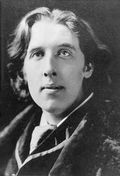
    Oscar

    A Tribute to The Genius of Oscar Wilde
    And now, I am dying beyond my means. — Oscar Wilde, while sipping champagne on his deathbed.

    Dave Berry retired, Erma Bombeck died far too young, and Will Rogers is doing his rope tricks in some other dimension. Andy Rooney was never much with a rope, but he just joined Will and Samuel Clemens in that…that…whatever. I read David Sedaris and listen to Garrison Keillor, but something is still missing in my life. I pore over my collection of Gary Larson’s Far Side cartoons looking for one that I might have missed in my numerous past searches. They still make me smile, but not roar like they once did. Where is the humor today? Who are our humorists? Humor seldom survives the passing of time. Abbot and Costello movies aren’t funny anymore. Lenny Bruce isn’t even controversial today, neither is Redd Foxx or Mort Sahl. And how about watching an old silent film starring Buster Keaton or Charlie Chaplin, they’re cute, but hardly funny—side-splittin’ funny—like they once were. The one exception might be Oscar Wilde. He wrote all of his funny stuff in the later part of the Nineteenth Century and it’s still funny today, to me anyway. How could you not be funny, growing up in Ireland with a name like, Oscar Fingal O’Flahertie Wills Wilde? He once said this about his name: My name has two Os, two Fs and two Ws. A name that is destined to be in everybody’s mouth must not be too long. It comes so expensive in advertisements. When one is unknown, a number of Christian names are useful, perhaps even needful. As one becomes famous, one sheds some of them, just as a balloonist, … rising higher, sheds unnecessary ballast … All but two of my five names have been thrown overboard. Soon I shall discard another and be known simply as “The Wilde” or “The Oscar”. It was at Oxford that he began to assert himself as an eccentric. He wore his hair long, openly scorned sports, and decorated his rooms with peacock feathers, lilies, sunflowers, blue china, and other objets d’art. He once remarked to a friend, “I find it harder and harder every day to live up to my blue china.” This was to be the first of his many, many memorable lines. Here are some of his witty epigrams that still make me chuckle, or scratch my head in awe: A cynic is a person who knows the price of everything and the value of nothing. A dreamer is one who can only find his way by moonlight, and his punishment is that he sees the dawn before the rest of the world. A man’s face is his autobiography. A woman’s face is her work of fiction. A pessimist is one who, when he has a choice of two evils, chooses both. A really well-made buttonhole is the only link between Art and Nature. All the good things in life are immoral, illegal, or heavily taxed. Lord Illingworth: All women become like their mothers. That is their tragedy. Mrs. Allonby: No man does. That is his. Always forgive your enemies; nothing annoys them as much. America had often been discovered before Columbus, but it had always been hushed up. America is the only country that went from barbarism to decadence without civilization in between. Anybody can be good in the country; there are no temptations there. Anybody can write a three-volume novel. It merely requires a complete ignorance of both life and literature. Anyone who lives within their means suffers from a lack of imagination. Art is the most intense mode of invidualism that the world has known. As soon as people are old enough to know better, they don’t know anything at all. As a rule, I dislike modern memoirs. They are generally written by people who have either entirely lost their memories, or have never done anything worth remembering. Bad artists always admire each other’s work. Being natural is simply a pose. Bigamy is having one wife too many. Monogamy is the same. Caricature is the tribute that mediocrity pays to genius. Consistency is the last refuge of the unimaginative. Democracy means simply the bludgeoning of the people by the people for the people. Discontent is the first step in the progress of a man or a nation. Don’t talk about action … Its basis is the lack of imagination. It is the last resource of those who know not how to dream. Everyone should keep someone else’s diary. Everybody who is incapable of learning has taken up teaching. Experience is the name everyone gives to his mistakes. Faithfulness is to the emotional life what consistency is to the life of the intellect — simply a confession of failures. Fashion is a form of ugliness so intolerable that we have to alter it every six months. He hadn’t a single redeeming vice. He had the sort of face that, once seen, is never remembered. Humanity takes itself too seriously. It is the world’s original sin. If the caveman had known how to laugh, History would have been different. I am not young enough to know everything. I can resist everything except temptation. I can’t help detesting my relations. I suppose that it comes from the fact that none of us can stand people having the same faults as ourselves. I choose my friends for their good looks, my acquaintances for their good characters, and my enemies for their intellects. A man cannot be too careful in the choice of his enemies. I delight in men over seventy. They always offer one the devotion of a lifetime. I think seventy an ideal age for a man. I do not play cricket because it requires me to assume such indecent postures I like men who have a future and women who have a past. I live in terror of not being misunderstood. Oh, I like tedious, practical subjects. What I don’t like are tedious, practical people. There is a wide difference. I love acting. It is so much more real than life. In this world, there are two tragedies. One is not getting what one wants, and the other is getting it. It’s not whether you win or lose, it’s how you place the blame. Marriage is the triumph of imagination over intelligence. Second marriage is the triumph of hope over experience. Only dull people are brilliant at breakfast. Perhaps, after all, America never has been discovered. I myself would say that it has merely been detected. The old believe everything: the middle-aged suspect everything: the young know everything. The only way to get rid of a temptation is to yield to it. The only way a woman can ever reform a man is by boring him so completely that he loses all possible interest in life. The past is of no importance. The present is of no importance. It is with the future that we have to deal. For the past is what man should not have been. The present is what man ought not to be. The future is what artists are. The soul is born old but grows young. That is the comedy of life. And the body is born young and grows old. That is life’s tragedy. The world is a stage, but the play is badly cast. There is no secret of life. Life’s aim, if it has one, is simply to be always looking for temptations. There are not nearly enough. I sometimes pass a whole day without coming across a single one. It is quite dreadful. It makes one so nervous about the future. And my absolute favorite: I was working on the proof of one of my poems all the morning, and took out a comma. In the afternoon I put it back again. Oscar left us way too young. He died bankrupt in an obscure Paris hotel of cerebral meningitis on 30 November 1900 at the age of 46. A verse from his last work, The Ballad of Reading Gaol, was used as his epitaph.

    And alien tears will fill for him Pity’s long-broken urn, For his mourners will be outcast men, And outcasts always mourn.

    Death must be so beautiful. To lie in the soft brown earth, with the grasses waving above one’s head, and listen to silence. To have no yesterday, and no tomorrow. To forget time, to forgive life, to be at peace.

    Oscar Wilde (1854–1900)
  • (The Best Shaggy Dog Stories)

    I never realized why I liked Shaggy Dog stories so much until I read that, in its original sense, a shaggy dog story is an extremely long-winded tale featuring extensive narration of typically irrelevant incidents, usually resulting in a pointless or absurd punchline. That sounds like the story of my life. Wouldn’t it be great to have your life story summarized, by some wind-bag in the future, as a shaggy dog story? I would be so flattered. In the meantime, here are some of the better ones going around.

    Gemo numerus unus (Groaner number one)
    Bob Hill and his new wife Betty were vacationing in Europe, as it happens, near Transylvania. They were driving in a rental car along a rather deserted highway. It was late, and raining very hard. Bob could barely see 20 feet in front of the car.

    Suddenly the car skids out of control! Bob attempts to control the car, but to no avail! The car swerves and smashes into a tree. Moments later, Bob shakes his head to clear the fog. Dazed, he looks over at the passenger seat and sees his wife unconscious, with her head bleeding! Despite the rain and unfamiliar countryside, Bob knows he has to carry her to the nearest phone.

    Bob carefully picks his wife up and begins trudging down the road. After a short while, he sees a light. He heads towards the light, which is coming from an old, large house. He approaches the door and knocks. A minute passes. A small, hunched man opens the door. Bob immediately blurts, “Hello, my name is Bob Hill, and this is my wife Betty. We’ve been in a terrible accident, and my wife has been seriously hurt. Can I please use your phone?”

    “I’m sorry,” replied the hunchback, “but we don’t have a phone. My master is a doctor; come in and I will get him!”

    Bob brings his wife in. An elegant man comes down the stairs. “I’m afraid my assistant may have misled you. I am not a medical doctor; I am a scientist. However, it is many miles to the nearest clinic, and I have had a basic medical training. I will see what I can do. Igor, bring them down to the laboratory.”

    With that, Igor picks up Betty and carries her downstairs, with Bob following closely. Igor places Betty on a table in the lab. Bob collapses from exhaustion and his own injuries, so Igor places Bob on an adjoining table. After a brief examination, Igor’s master looks worried.

    “Things are serious, Igor. Prepare a transfusion.” Igor and his master work feverishly, but to no avail. Bob and Betty Hill are no more.

    The Hills’ deaths upset Igor’s master greatly. Wearily, he climbs the steps to his conservatory, which houses his grand piano. For it is here that he has always found solace. He begins to play, and a stirring, almost haunting, melody fills the house.

    Meanwhile, Igor is still in the lab tidying up. His eyes catch movement, and he notices the fingers on Betty’s hand twitch, keeping time to the haunting piano music. Stunned, he watches as Bob’s arm begins to rise, marking the beat! He is further amazed as Betty sits straight up! Unable to contain himself, he dashes up the stairs to the conservatory. He bursts in and shouts to his master: “Master, Master! The Hills are alive with the sound of music!”

    Gemo numerus duos
    There were three Indian squaws. One slept on a deerskin, one slept on an elk skin and the third slept on a hippopotamus skin. All three became pregnant and the first two each had a baby boy. The one who slept on the hippopotamus skin had twin boys. This goes to prove that the squaw of the hippopotamus is equal to the sons of the squaws of the other two hides.

    Gemo numerus tres
    Most people don’t know that in 1912, Hellmann’s Mayonnaise was manufactured in England. The Titanic was carrying 12,000 jars of the condiment scheduled for delivery in Vera Cruz, Mexico that was to be the next port of call for the great ship after New York City.

    The people of Mexico eagerly awaited the first delivery and were very upset at the news of the sinking. They were so upset that they declared a national day of mourning which they still observe today.

    The Holiday is known, of course, as: Sinko de Mayo.

    Gemo numerus quattuor
    Evidence has been found that William Tell and his family were avid bowlers. However, all the Swiss bowling league records were unfortunately destroyed in a fire, so we’ll never know for whom the Tells bowled.

    Gemo numerus quinque
    A group of chess enthusiasts checked into a hotel and were standing in the lobby discussing their recent tournament victories. After about an hour, the manager came out of the office and asked them to disperse.

    “But why?” they asked, as they moved off.

    “Because,” he said, “I can’t stand chess-nuts boasting in an open foyer.”

    Gemo numerus sex (Sex is six in Latin, so don’t yell at me)
    These friars were behind on their belfry payments, so they opened up a small florist shop to raise funds. Since everyone liked to buy flowers from the men of God, a rival florist across town thought the competition was unfair. He asked the good fathers to close down, but they would not.

    He went back and begged the friars to close. They ignored him. So, the rival florist hired Hugh MacTaggart, the roughest and most vicious thug in town to “persuade” them to close. Hugh beat up the friars and trashed their store, saying he’d be back if they didn’t close up shop. Terrified, they did so, thereby proving that only Hugh can prevent florist friars.

    Gemo numerus septem
    There was a mad scientist, who developed a way of making bottle nosed dolphins live forever. The problem was, they had to be fed a diet of nothing but dead mynah birds. Being a mad scientist, he couldn’t exactly get them on the open market, so he stole the birds from the local zoo.

    One night, he was at the zoo making his regular “visit”. As he was leaving with his bag of mynahs, he saw a lion, sleeping in the doorway he had to pass to leave.

    Carefully and quietly, he stepped over the lion, reached the outside, and was immediately arrested. The police charged him with: “Transporting mynahs across a staid lion for immortal porpoises”

    Gemo numerus octo
    Larry the lobster and Sam the clam were best friends. One day, Sam died leaving Larry all alone. Eventually Larry died and went to heaven. The first person he met there was his old friend Sam.

    Sam was doing very well in heaven. In fact, he even had his own nightclub. He invited Larry over for the evening, and asked him to bring his harp. Larry had a terrific time, and sat in with the band on his harp, jamming until the wee hours of the morning.

    On his way home, Larry stopped in the middle of the heavenly road, and exclaimed, “Oh no! I left my harp in Sam Clam’s disco!”

    Gemo numerus novem
    A great scientist had a large number of speaking engagements; so many he couldn’t possibly get to them all. Being a genius, he decided to clone himself, and have the clone take half the engagements.

    This worked out well for awhile, but the clone suddenly started spouting obscenities during several of his speeches. The scientist talked to him, telling him not to act this way, since he was acting as the great man’s representative. The clone stopped, but not for long, and was soon using almost nothing but foul language in his speech.

    Finally the scientist could take it no longer, and decided to get rid of the evil clone. He brought him up to the observation deck of the Empire State Building, and pushed him off.

    When he got down to the ground floor, he was immediately arrested and charged with; Making an obscene clone fall.

    Gemo numerus decem
    This guy goes into a restaurant for a Christmas breakfast while in his hometown for the holidays. After looking over the menu he says, “I’ll just have the Eggs Benedict.”

    His order comes a while later and it’s served on a big, shiny hubcap. He asks the waiter, “What’s with the hubcap?”

    The waiter says, “Well, there’s no plate like chrome for the hollandaise.”

    Post Scriptum – I added the Latin for a little class

  • Call me Ishmael. I spent the spring of my 71st year reading Moby Dick; or, The Whale by Herman Melville, and why he couldn’t decide on just one name for this epic story is beyond me. Melville used stylized language, symbolism, and metaphors to dig into some heavy themes, like class and social status, good and evil, and the existence of God. I’m okay with all of that, as I am with his use of soliloquies (speaking to himself), and asides (speaking to the reader). I had to look both of those terms up as I did hundreds of other unfamiliar words. Fortunately I read this huge book on a Kindle, and Kindles have a built in dictionary that follows you through the text. You don’t “look words up,” you just click on them.

    Melville was a surveyor, a teacher, a sailor and a deserter before he became an author. But it was his desertion that caught my attention. He deserted the Acushnet in the Marquesas Islands and lived among the native cannibals for a short time, and he actually had a love affair with a beautiful native girl. Wow!

    As I slugged through all 556 pages, I kept telling myself that this classic tale, which many consider to be one of the great American novels, was published in 1851, and that Melville was a “preppie,” educated at the New York Male School (Columbia Preparatory School) and went on to study the classics at the Albany Academy, so he was probably well versed in Latin and Middle English. His use of unfamiliar, archaic and nautical terms kept my finger on the dictionary clicker.

    In chapter 104 Melville argues that a big subject, such as whales, requires the use of big words. I highlighted the words I had to look up in his paragraph on page 452. It reads:

    Since I have undertaken to manhandle this Leviathan, it behoves me to approve myself omnisciently exhaustive in the enterprise; not overlooking the minutest seminal germs of his blood, and spinning him out to the uttermost coil of his bowels. Having already described him in most of his present habitatory and anatomical peculiarities, it now remains to magnify him in an archaeological, fossiliferous, and antediluvian point of view. Applied to any other creature than the Leviathan – to an ant or a flea – such portly terms might justly be deemed unwarrantably grandiloquent. But when Leviathan is the text, the case is altered. Fain am I to stagger to this emprise under the weightiest words of the dictionary. And here be it said, that whenever it has been convenient to consult one in the course of these dissertations, I have invariably used a huge quarto edition of Johnson, expressly purchased for that purpose; because that famous lexicographer’s uncommon personal bulk more fitted him to compile a lexicon to be used by a whale author like me.

    Here are some of the other useless words I looked up reading Moby Dick: or, The Whale:

    antediluvian – of or belonging to the time before the biblical flood
    antiscorbutic – having the effect of preventing or curing scurvy
    arrant – complete, utter
    Belshazzar – last king of Babylon
    binnacle – a built-in housing for a ship’s compass
    bruit – spread (a report or a rumor) widely
    bulwark – a defensive wall
    bumper – a generous glassful of an alcoholic drink
    burton – light two-block tackle for hoisting
    cabalistic – relating to mystical interpretation or esoteric doctrine
    cachalot – another term for sperm whale
    cambric – a lightweight, closely woven white linen or cotton fabric
    capstan – a revolving cylinder used for winding a rope
    conflagration – an extensive fire that destroys a great deal of land or property
    cozen – trick or deceive
    crupper – a strap buckled in the back of a saddle looped under the tail
    demijohn – a bulbous narrow necked bottle typically enclosed in wicker
    descry – catch sight of
    doxology – a liturgical formula of praise to God
    effulgent – shining brightly; radiant
    emetic – causing vomiting
    evanescent – soon passing out of sight, memory, or existence
    fain – pleased or willing under the circumstances
    ferrule – a ring or cap that strengthens the end of a handle, stick, or tube
    filial – of or due from a son or daughter
    furkin – a unit of liquid volume equal to half a kilderkin
    gam – a social meeting or informal conversation among whalers at sea
    Giaconda – a source of wealth, advantage, or happiness
    gunwale – the upper edge of the side of a boat or ship
    hartshorn – aqueous ammonia solution used as smelling salts
    hawser – a thick rope or cable for mooring or towing a ship
    Hindoo – archaic spelling of Hindu
    hoe-cake – a coarse cake made of cornmeal, baked on the blade of a hoe
    imprecate – utter a curse or invoke evil against someone
    kelson – or keelson, a centerline structure running the length of a ship
    lancet – a small two-edged surgical knife with a sharp point
    leviathan – a sea monster, a large aquatic creature especially a whale
    marl – a loose or crumbling earthy deposit, as of sand, silt, or clay
    misanthrope – a person who dislikes humankind and avoids human society
    Mogul – a member of the Muslim dynasty of Mongol origin
    moidore – a Portuguese coin
    moulder – or molder, slowly decay or disintegrate, esp. because of neglect
    mummery – performance by mummers
    oakum – loose fiber obtained by untwisting old rope
    orison – a prayer
    osseous – consisting of or turned into bone
    pennon – a long triangular or swallow-tailed flag
    pertinacious – holding firmly to an opinion or a course of action
    pitchpole – somersault
    primogeniture – the state of being first born
    puncheon – a short post used for supporting the roof in a coal mine
    recondite – of a subject or knowledge little known
    sinecure – a position requiring little or no work but giving status
    snatch – a fragment of song or talk
    somnambulism – sleepwalking
    sooth – in truth; reality
    spavin – a disorder of a horse’s hock
    spermaceti – a white waxy substance produced by the sperm whale
    spiracle – an external respiratory opening
    stolid – (of a personal) calm, dependable and showing little emotion
    surcoat – a loose robe worn over armor
    surtout – a man’s overcoat similar to a frock coat
    tarpaulin – a sailor’s tarred or oilskin hat
    Tartarus – a primeval Greek god, the offspring of Chaos
    taffrail – a rail and ornamentation around a ship’s stern
    tither – to or toward that place
    unvitiated – pure and uncorrupted
    verdigris – a bright bluish-green encrustation or patina formed on copper
    verdure – lush green vegetation
    vertu – or virtu – knowledge of or expertise in the fine arts
    windlass – a type of winch used to hoist anchors

    Melville dedicated Moby Dick to Nathaniel Hawthorne: “In token of my admiration for his genius, this book is inscribed to Nathaniel Hawthorne.” And in a letter to Hawthorne written shortly after Moby Dick’s publication, Melville said in part:

    … for not one man in five cycles, who is wise, will expect appreciative recognition from his fellows, or any one of them. Appreciation! Recognition! Is Jove appreciated? Why, ever since Adam, who has got to the meaning of his great allegory—the world? Then we pigmies must be content to have our paper allegories but ill comprehended. I say your appreciation is my glorious gratuity.

    It seems that Melville wrote Moby Dick for Hawthorne and was thrilled when Hawthorn gave him a thumbs-up (or whatever they did in 1851).

    I enjoyed the story, the characters, all of the messages he wedged into this adventure story, along with the wonderful detail that he immerses us in. If you’ve ever wondered about the hundreds of baleen plates in the mouths of Right Whales—Melville’s your guy.

  • Something happened yesterday I can’t explain. Venus passed in front of the sun, and I was content with just seeing the pictures on TV. I didn’t race out looking for filtered glasses, or research how to make them at home; I just sat on my butt and went about my humdrum life like nothing unusual was happening. I missed this rare astronomical occurrence even though I’ll be 372 years old when it happens again.

    I’m the guy that stood in line for hours to see Mars at its closest point to Earth through a telescope at the local university, and spent my teenage years frantically swinging my crude telescope from striking views of Saturn to even more interesting views through a nearby bedroom window.

    And I once spent an entire cold, winter night capturing a total eclipse of the moon in time-lapse photography. Since the moon is moving across the sky while all of this is going on, you have to shoot, wait the desired amount to time, move the camera to the moon’s new position, and shoot again, and so forth, over and over and over.

    But nothing tops the night my cousin and I drug a telescope up a peak in the dark to get a better view of Haley’s Comet. We knew that, that evening was our only shot at seeing Haley’s in our lifetimes and we weren’t going to miss it.

    But I just missed the once-in-a-lifetime chance to see Venus pass in front of the sun and I didn’t seem to care. Do you think I’m just getting old or…or am I finally growing up.

  • Psst – Just to keep you on your toes, there are three past participles of abide—abode, abided, and abidden.

    Someone far wiser than me observed that a man’s interests change predictably over his lifetime. They go from sports, to women, to career, to golf, and finally to bowel movements. I’m teetering on edge the last phase, but back somewhere between sports and women my passion was art. Throughout my early years, I was so well regarded as an art student that I enrolled at the Colorado Institute of Art immediately after high school. It was there I learned a valuable lesson. I learned that it’s really difficult to go to an expensive private school, buy all sorts of art supplies, and have some semblance of a social life on a gas station attendant’s salary. So I joined the Marines and put my artistic ambitions on hold.

    The Marines stirred new interests in me. I became obsessed with blowing things up with hand grenades, charring the countryside with flame throwers, laying down fields of fire with machine guns, and other really fun stuff. But the Marines actually introduced me to something useful, something that became my calling, my course of study, and my career—electronics. It fascinated me to finally understand, really understand, how radios work or how TV signals propagate through the air or how autopilots actually fly planes. I was hooked. I didn’t have time to drip paint on my smock or get chalk dust in my hair anymore, I had electronic circuits to troubleshoot, to design.

    I’ve tried to rekindle my interest in art by seeking out the works of others. I’ve spent endless hours in the Prado, the Tate, MoMA, the Louvre, and most of the major galleries here at home, but it was the Impressionists in Winter: Effets de Neige exhibit at the The Phillips Collection in Washington DC that I remember most vividly. I can close my eyes and still see the truly wonderful, impressionist paintings of les effets de neige (the effects of snow) by Claude Monet, Alfred Sisley, and Camille Pissarro. Wonderful!

    Somewhere along the line, art ceased to be my passion and became an endless source of beauty, enjoyment and wonder.

    Another place that haunts me is The Rothko Chapel in Houston, Texas with its fourteen huge black and color hued paintings Mark Rothko spent six years preparing for the chapel that he co-designed and never saw finished. He took his own life before the chapel was completed, adding to the aura of this place, his most important artistic statement.

    Some of my other moving memories are: the Monet in the 20th Century exhibit at the Museum of Fine Arts in Boston, seeing Norman Rockwell at his studio in Stockbridge, the Cezanne exhibit in Philadelphia, R. C. Gorman’s gallery in Taos, meeting Amado Peña in Scottsdale, and the wonderful work of Andrew Wyeth at his Chadds Ford Gallery. Oh I almost forgot…the Edward Hopper exhibit at the National Gallery of Art in Washington and his permanent collection at MoMA etched deep and lasting impressions on my soul.

    I picked up a piece of charcoal a few years back and doodled on a sketch pad long enough for me to realize that this wasn’t my calling anymore. And it wasn’t that long ago that I had to know how every new electronic gadget worked. Okay, so I figured out how the GPS in my car works, but that doesn’t make me the nerd I used to be. I’ve entered into a new phase of my life. I’m a writer-wantabe.

    I now spend endless hours at my computer trying to get my margins right in Microsoft Word, looking up arcane words, or searching for acceptable synonyms for words like—bullshit. Did you know that you can use bull, shit, crap, bunk, bunkum, buncombe, guff, rot, or hogwash as a replacement noun, and bull, fake, feign, sham, pretend, affect, or dissemble as an alternate verb? But it’s the placement of commas that is life’s real challenge. I, tend, to, stick, them, everywhere or leave them complexly out just to be safe. Either way, I’m always wrong.

    So there you have it, I’m an old Marine that pictures himself as a bumbling art aficionado, and is technically savvy, for a geezer anyway. The good news is—I’m getting near the end of my bucket list and I’ve still got a couple of years left. But, I’m destined to spend my final days at my computer, writing nonsense like this, contemplating my next bowel movement.